
Axiophytes
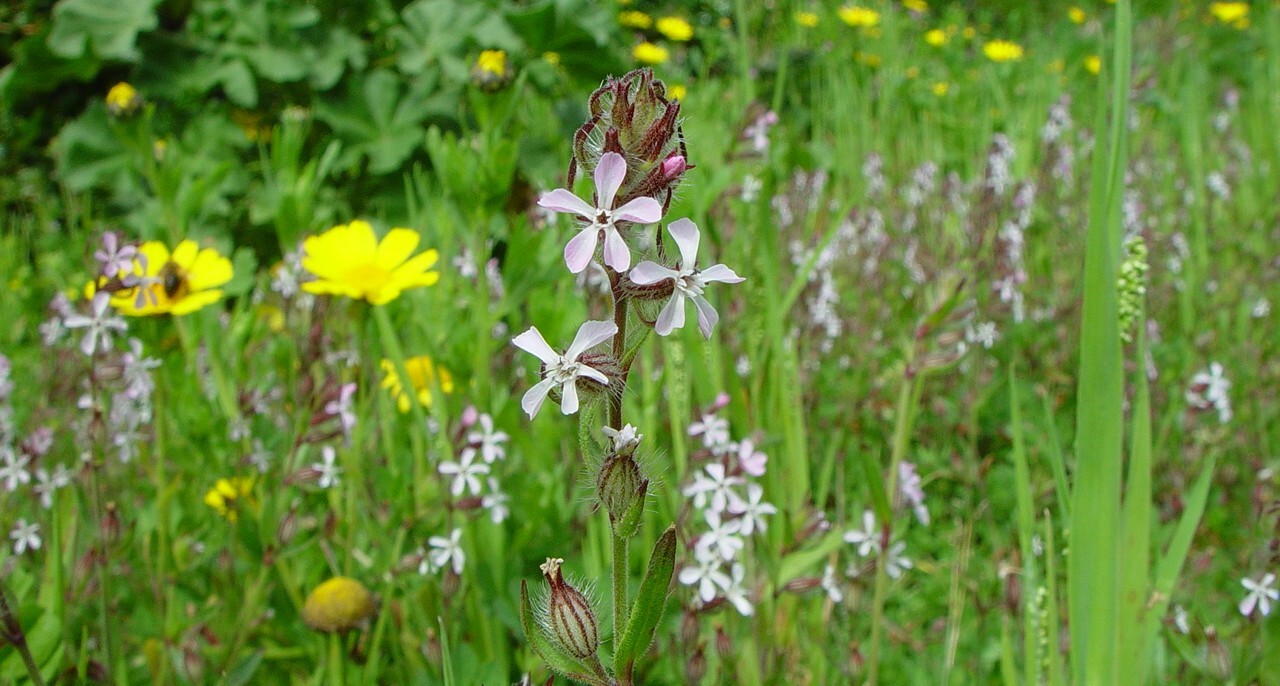
Axiophytes are the plants that matter to nature conservation.
The lists of axiophytes are drawn up by county recorders or other expert botanists who understand both the ecology of plants and the priorities of the nature conservation organisations that operate in their county. There are several rules:
- They should be plants that are largely restricted to conservation-grade habitat (we suggested 90% but that's never really been tested).
- They should not be too common (we suggested no more than 25% of tetrads in a county, but again that has never been tested).
- They should not be too rare because if you have a plant in just one place, how can you tell if it is confined to good habitat, or simply happens to be in a nice place? Plants that have declined to just a few places, however, should definitely be included.
- They don't have to be native.
County recorders have generally identified about 40% of the native species in their county as axiophytes, which is perhaps a surprisingly high proportion. This can amount to about 400 species in a typical English county.
Conservationists have been struggling for ages to come up with criteria for plants to measure ecological value. People are always hoping for 'scientific' criteria such as rarity, threat, habitat indicators or notable species to avoid just saying 'we like these plants'.
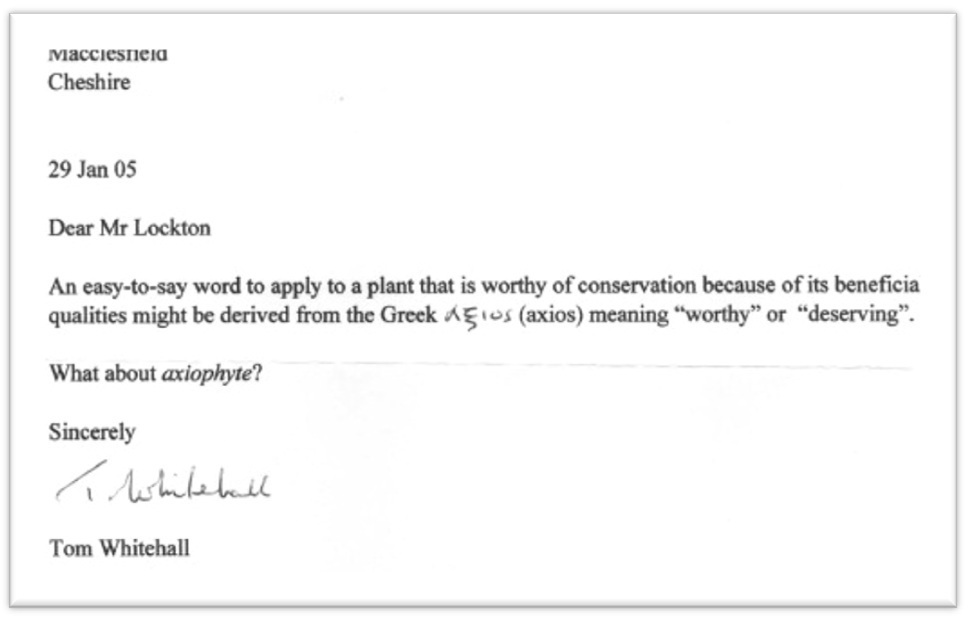
But what is wrong with simply saying 'these are our priorities'? None of those simple factors adequately captures the complexity of conservation objectives, so in 2005 we came up with the concept of axiophytes. I've still got the letter by Tom Whitehall, who coined the word in response to a competition in BSBI News. It's quite fun to know the precise date on which a new word was coined. I also like the way he left a space so he could write the Greek letters in by hand.
Some systems have obvious faults: rare plants, for example, might not necessarily be important at all. A species that is common all over Europe and just makes it into one corner of England isn't necessarily worthy of any conservation effort. Think Jersey Cudweed, for example.
The concept of threatened species is often misapplied. A plant that is globally threatened is genuinely in need of conservation, but what if it is just declining slightly in England? When you think about it, a proportion of plants will always be decreasing in any particular area, while others are increasing. Studies of threatened plants usually show that about a third of species are decreasing; and they probably always will do.
Biodiversity Action Plans also tend to be unsuccessful. The idea is that you concentrate on a few flagship species just because that seems an easy thing to do. But you end up growing plants in pots and popping them out into nature reserves, where they die after a while because nothing has changed. This seems the opposite of nature conservation, although it keeps people busy.
Axiophytes, however, make sense when it comes to monitoring ecosystems: they are independent of the user; they are chosen by experts; there are lots of them, and they are fussy about habitat, so planting them to fake an outcome is very difficult. Narrowing down a species list to concentrate on just the axiophytes makes it much easier to understand a botanical survey.
There are admittedly some issues with axiophytes which you will come across when you use them: acidic and nutrient-poor habitats can be valuable but inherently have fewer species, so bear that in mind; also, anything that is planted (such as trees) might not be functioning as axiophytes, so you can ignore them.
Here are some of the more interesting publications I've seen on axiophytes. Let me know if you find something I should add to the list.
- BSBI page
- Wikipedia page
- Flora of Shropshire
- Devon (identifying wildlife sites)
- Meres and Mosses
- Surrey grassland inventory
- Axiophytes of Kent and the LNRS species of Kent
- Norfolk axiophytes and a Norfolk axiophyte experiment
- Axiophytes in Lincolnshire (MSc by Margaret Cole)
- Bute
- Caithness (listing EUNIS habitats)