
Training
If we want to call ourselves ecologists, we should be aiming not just for a level 5 surveyor's qualification, but to become a level 7 researcher. For that we do need to know plant names, but a species list does not manage a site, and counting does not conserve an animal. For that, we need to engage with vegetation science, monitoring and publishing.
Education can be expensive these days, and I often get asked what courses a person should do. The answer is, before you sign up, ask to see some of your tutor's publications. If that is the sort of thing you want to be able to do, then you're in the right place. It's as simple as that. People can't teach you stuff that they can't do themselves.
My philosophy is to offer a wide range of courses at sensible prices. The aim is that you'll progress from basic plant ID all the way through to levels 7 and 8, in time. You can dip in and drop out as you like, with nothing to lose. A person with quite basic identification skills can be doing high quality work while they are still learning, so I encourage people to stretch themselves even when they don't yet know the names of all the common plants.
Courses available
- Botany evening classes in Canterbury & Maidstone
- Online classes on computer stuff: recording, Excel, NVC, RMavis and writing
- Field courses on NVC
- Day-long and week-long plant identification courses
- A plant ID test, which is like a smarter type of fisc
- Certificates in NVC (levels 1, 2 and 3) and monitoring
These are on www.ticketsource.co.uk/alex-lockton
and: https://www.kentwildlifetrust.org.uk/botany-classes
I also run bespoke training and testing for companies throughout Britain. To discuss your requirements, email me.
There are several certificates I can offer to validate the training you have done:
- Certificate in vegetation classification. There are three levels, from a basic NVC survey (level 1) to a study of succession (level 2) to a full phytosociological analysis (level 3).
- Certificate in monitoring. For this, you have to produce a convincing analysis of a site and the changes occurring within it.
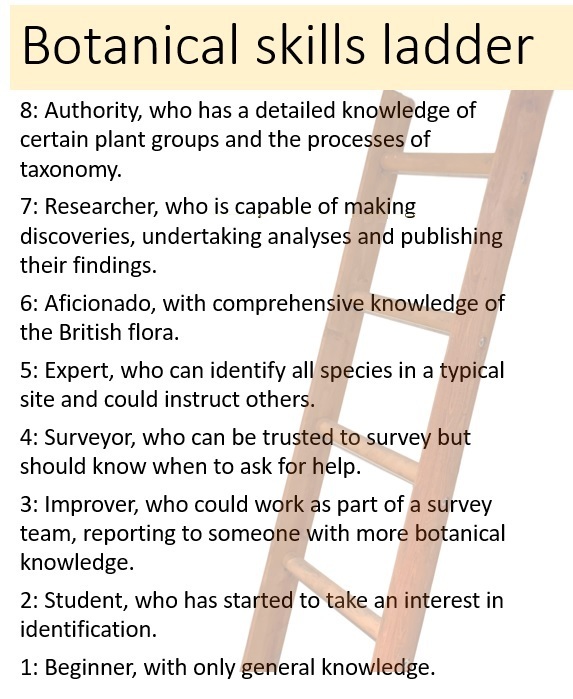
- Plant ID test. This uses the botanical skills ladder to assign a skill level from 1 (beginner) to 8 (authority). Unlike the fisc it embraces modern technology such as phone apps and is designed to tell employers what professional skills you can offer them.
Evening classes are held at Canterbury Christ Church University and Kent Wildlife Trust throughout the winter. In these classes, we explore plant identification, scientific keys, biological recording and ecology. Visit Kent Wildlife Trust for details.
At KWT you can also sign up for day schools or a week-long summer school on plant identification that is held at Kent University in Canterbury.
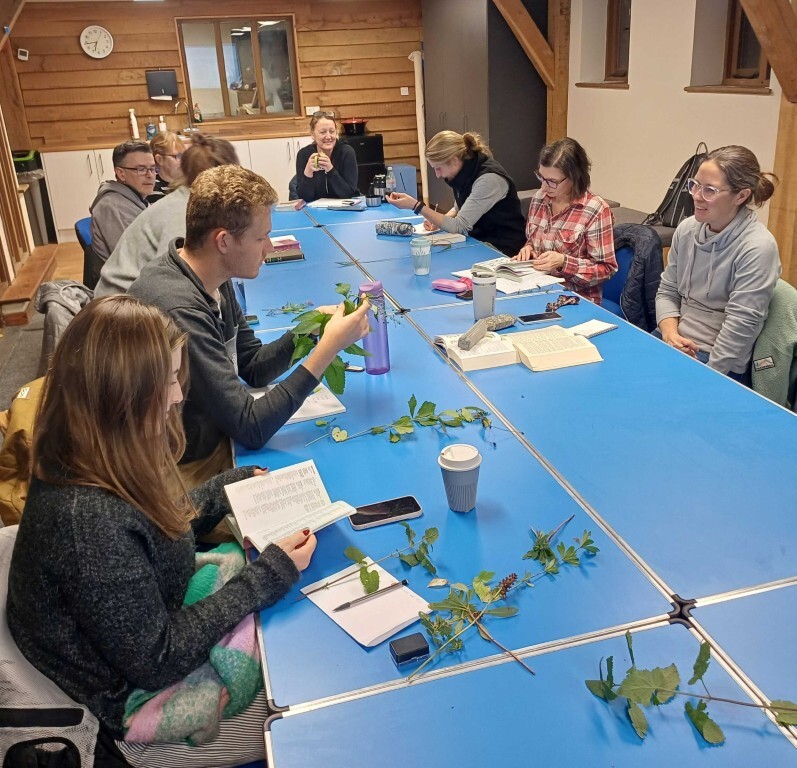
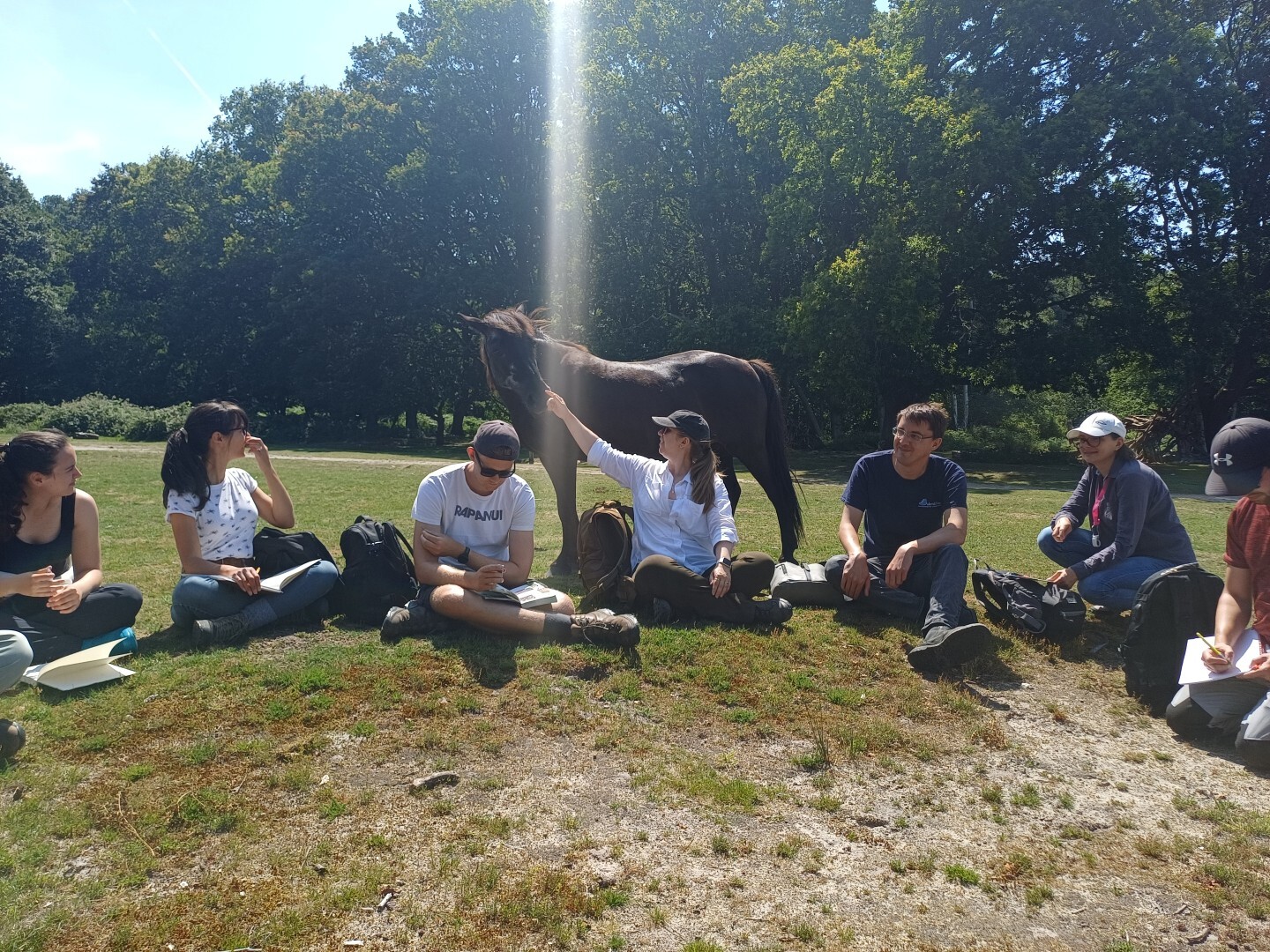
I only teach things that I actually use in consultancy work. I don't bother with floral diagrams, winter trees or vegetative grass ID because those don't strike me as things that a field botanist really should be doing, unless they have a specific reason.
But I can teach you about identifying and recording plants with a phone app, creating and using a key, taking photos, making specimens, using referees, extracting data from literature and all the skills that you do need.
Even more fun is learning what to do with the information you collect. How to compile your data into Excel, working out what the axiophytes are, describing NVC communities, monitoring changes and publishing your results - these are the things that will allow you to produce high quality reports and compete with AI in future.